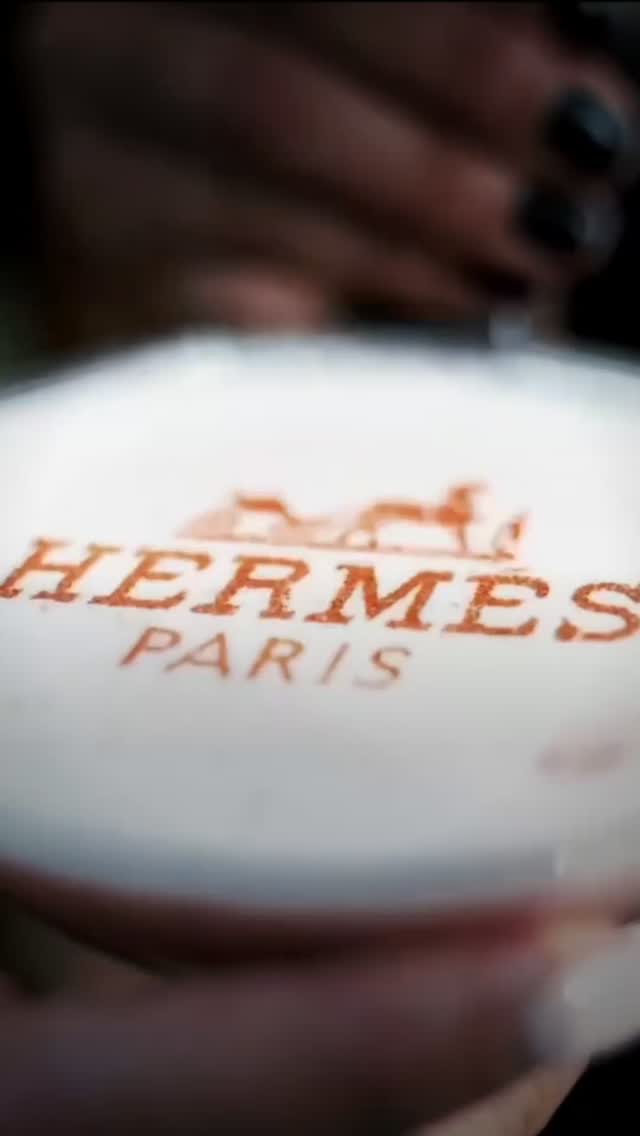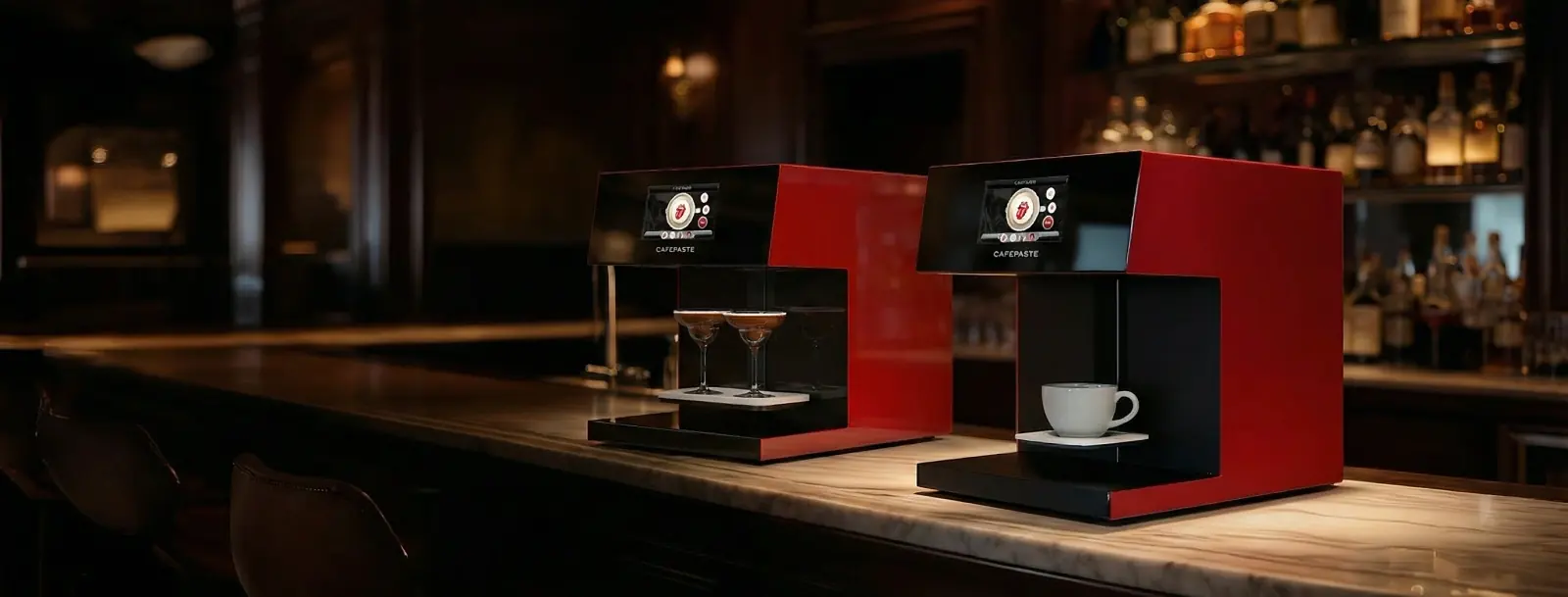
A “3D coffee printer” is usually a misnomer. Devices sold under that search term, including CAFEPASTE, apply a flat image to the surface of a drink's foam. Nothing is built up in three dimensions, even when a photo looks as if it has depth. That is fine for logos and photos, but buyers expecting sculpted foam should know before they order.
Is a 3D coffee printer really three-dimensional?
No. A device sold as a 3D coffee printer machine puts ink on the surface of the foam, much as a paper printer puts ink on a page. The image has no height. The word “3D” has become attached to this category because it sounds futuristic and because people link any new printing technology with 3D printing.
We would rather say this plainly. CAFEPASTE is a coffee printer that produces flat images. A portrait can appear to have depth because of its light and shadow, just as a photo does on paper, but the foam stays level.
What is the difference between flat print and real 3D coffee art?
Three separate things get mixed up under this search term. They differ in who makes them, how long they take and what a venue would need in order to offer them.
| Type | What it is | How it is made | Works as a logo or photo? |
|---|---|---|---|
| Printed foam art | A flat image on the foam surface | By a device, in seconds | Yes |
| Hand-built 3D foam art | Figures such as animals rising out of the cup | By hand with stiff foam and small tools | No, and it is slow to make |
| 3D food printing | Edible shapes built up layer by layer | By a specialist food printer, a different category of equipment | It is not a coffee foam process |
If guests are asking for a cat climbing out of a cappuccino, that is a hand-made skill and no coffee printer will do it. If they want their face or your logo on the drink, a flat print is exactly what is needed. Our short explanation of what a coffee printer is covers the basics.
What does a coffee printer actually do?
It adds food-safe edible ink to the top of a prepared drink. CAFEPASTE offers full colour (CMYK) and natural coffee-based classic brown in the same device, with an art time of ~10 s per cup on Pro and ~15 s on Lite. Height and centring are automatic, and images arrive through a QR code or phone.
It does not make espresso, steam milk or replace an espresso machine. It does not print on the outside of cups either. Our guide on the coffee machine that prints pictures follows a guest photo from phone to foam.
Is a 3D coffee printer for home or commercial use?
CAFEPASTE is sized and set up for businesses. A home buyer may still be curious, so here is how the practical points compare.
| Point | Commercial venue | Home kitchen |
|---|---|---|
| Size and weight (45 × 45 × 45 cm, 15 kg) | Fits a planned spot on the counter | Takes up a large part of a typical worktop |
| Pod life (2 weeks after opening) | Regular service uses it within the period | A few drinks a week may leave a Pod unused |
| Foam supply | Espresso machine and trained staff in place | Needs a machine that makes a stable foam |
| Cost justification | Can be weighed against sales and branding | Purely a personal purchase, with no income to offset it |
| Designs | Logos, events, guest requests, seasonal art | Personal photos and occasional fun |
CAFEPASTE serves 500+ businesses in 30+ countries, and that is the use this article has in mind. Owners and managers of cafés, bakeries, hotels, bars, caterers and event companies will find the numbers easier to justify than someone buying for a home kitchen.
Who should not buy a coffee printer?
A clear answer here will save you money and us a difficult conversation. You should probably not buy one if any of these describe you:
- You want real 3D shapes. The image is flat and will stay flat.
- You serve few foam drinks. Without a foam or cream layer, the device has nothing to work on.
- You make only a few drinks a week. An opened Pod lasts 2 weeks, so low use can mean waste.
- You need an espresso machine. A coffee printer does not make coffee, so buy that first.
- You want to print on the cup. It works on the drink surface, not on the outside of a cup.
- Your counter has no room. Measure first, allowing for 45 × 45 × 45 cm and a place where staff can reach it easily.
Who is it a good fit for?
It suits venues that already serve a steady volume of milk or foam drinks and have a real use for images on them. Examples are cafés that want their logo on the cup, hotels greeting guests or groups, event companies selling personalised drinks to clients, and bakeries that want art on cakes and pastries, which is a CAFEPASTE Pro feature with art up to 12 cm.
If that describes your business, the next decision is the model. Pro handles 2 cups at once and desserts, while Lite handles one cup at a time. Our Pro versus Lite guide walks through the choice.
KEY TAKEAWAYS
- “3D coffee printer” is a search phrase, and the image these devices produce is flat.
- Hand-built 3D foam art is a separate craft that a printer does not reproduce.
- CAFEPASTE is sized and set up for commercial counters, not typical home kitchens.
- Skip it if you need real 3D shapes, serve few foam drinks or lack an espresso machine.
- It suits venues with steady foam drink volume and a real use for logos and photos.
Frequently Asked Questions
Frequently Asked Questions
- Is there a real 3D coffee printer?
- The coffee printers usually sold under that name, including CAFEPASTE, print a flat image on foam. They do not build shapes upward. Three-dimensional foam figures are made by hand, and 3D food printing is a separate category of equipment.
- What does coffee 3D print mean?
- It is a common search phrase for printing an image on coffee foam. The result is two-dimensional, although a photo can look as if it has depth because of its light and shadow. If you need a raised shape, you are looking for hand-built foam art instead.
- Can a coffee printer make 3D foam animals?
- No. Foam figures that rise out of the cup are shaped by hand with stiff foam and small tools. A coffee printer can print a picture of an animal on a level foam surface, in full colour or classic brown with CAFEPASTE.
- Is a 3D coffee printer good for home use?
- For most homes it is hard to justify. CAFEPASTE measures 45 × 45 × 45 cm and weighs 15 kg, and an opened Pod lasts 2 weeks, which suits regular commercial use. You also still need a machine that can produce a stable foam.
- Does a 3D coffee printer make the coffee too?
- No. It works only on a drink that has already been made, and it does not make espresso or steam milk. You keep your espresso machine and place the printer beside it.
- Who should not buy a coffee printer?
- Businesses that serve few foam drinks, make only a handful of drinks a week, or still need an espresso machine should wait. It is also the wrong purchase if you want real 3D shapes or printing on the outside of cups. In those cases, your money is better spent elsewhere first.
- What resolution does a coffee printer have?
- CAFEPASTE Pro and Lite both print at 1200 DPI, in full colour (CMYK) or natural coffee-based classic brown. The clarity you actually see also depends on your source image and your foam. Bright, simple images on fine foam give the cleanest results.